|
The art of Henna has its origins in ancient
times and continues to be part of many cultures and traditions around
the world. Henna is versatile as it has coolant properties, can
be used for hair treatment, and temporarily stain the body or nails.
Dating back to 1200 BC, henna was first used by the Egyptian pharaohs
to stain their nails and hair. The people of Arabia and Africa have
used it on their hands and feet to keep them cool in the hot summer
days. It was brought to India by the Mughals (royals) and became
a part of the South Asian wedding customs ever since.
Henna
(Mehndi) is a temporary art form applied to the body using a natural
paste made from the henna plant. The leaves of the plant are crushed
to form a powder which is then mixed with oils and extracts to form
a paste. The paste itself is green in color, but the staining color
is reddish orange in nature. Natural henna has no adverse effects
or allergic reactions and is very safe to use. Black henna is not
pure henna and uses chemicals for a black dye stain on the body
and can give serious side effects.
Henna
styles are uniquely different all over the world. In Africa geometric
lines and shapes form the designs, and bold floral designs are worn
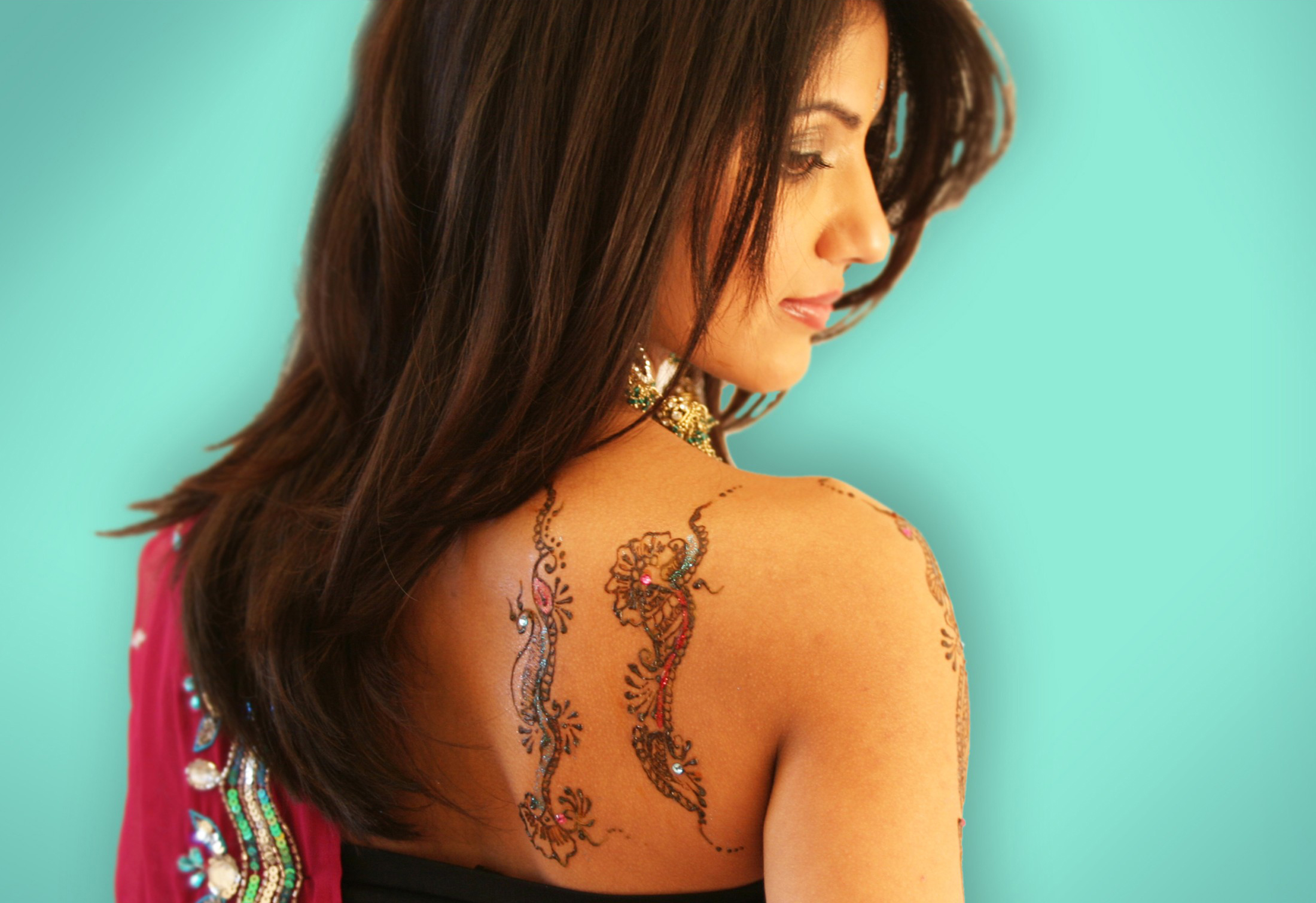
in the Middle East. In South Asia a mixture of paisleys, exotic
birds and finer details are used to adorn one’s hands and
feet. Bridal Mehndi is elaborately worn by every South Asian bride
on her wedding day with intricate and detailed work covering the
arms and feet, and modernly given the extra sparkle of glitter and
gems. Henna has also made its way to the West and applied in more
contemporary styles on the body.
|